Sunday, April 29, 2012

Blog # 7: "The Fight"

In class we were told to choose a from a few statements and elaborate on it, I chose this question: How does Rufus’ “destructive single-minded love” (Butler 180) shape the lives of Alice and Dana? What are the choices Alice and Dana make to cope with Rufus’ love? Do you agree with their choices?

When Rufus met Dana and Kevin, their relationship had a big impact on him. He saw that in the future White and Blacks could be married and this made him become obsessed with Alice, his childhood friend. She never felt the same way about him because she was a free black woman, who saw the treatment of slaves on the Weylin plantation. Rufus would never be the same as black person. They didn't have the same rights but Rufus' single-minded love caused him to do the worse damage he could have ever done, he forced himself on Alice and raped her. When she fled with her husband Issac she was captured and enslaved. Rufus bought her to save her from other slave owners, but his intentions were also based on his obsession with her. Now she would belong to him and he could have her whenever he wanted. 

Dana cares for Rufus, she has saved him from death and danger since he was little. She has a connection to him because of her ancestral history. He is one of her relatives and she saves him in order to preserve her family's history and her own life. Because Rufus is aware of his power over Dana, he manipulates and black mails Dana into accepting to heal Alice and send her to him. She is torn by her situation because if she doesn't do as he pleases, he can hurt Alice even more by getting her whipped and then still rape her. Her decision to cooperate with Rufus and somewhat coax Alice to sleep with him is done not because she wants to help Rufus, instead she does it in order to save Alice from further humiliation and pain. 

At first Alice is extremely angry with Dana, and she insults her because she is upset that Rufus has sent her to do his biding. She feels betrayed to some degree. Alice agrees to go and sleep with Rufus, her actions make her more subdued. She is angry but still does it because she knows that she doesn't have it in her to run away again. Dana understands the "destructive single-minded love" he has for her because of the last beating she has. She runs away because Alice finds her letters that she has written to Kevin, that should have been sent months ago. That was enough to make her see the liar that Rufus is, and the extra push she needed to run away and search for Kevin. She is captured and beat by Tom. When she confronts Rufus she realizes that Rufus has lied to her in efforts to keep her with him. He doesn't want her how he wants Alice, but he enjoys her company and the fact that she in fact does care for him and listens to him when he want someone to speak to.

Alice's and Dana's lives are shaped by Rufus' "destructive single- minded" love because Alice is raped and raped over and over again by the man that "loves" her. She allows it and lets him have his way with her. Dana lets this happen because she knows that her relatives and ancestors depend on it. Dana also suffers because she trusts his word and is always helping him even though he is using her and lying to her in the process. She is connected to him and so is Alice because now they are both subjected to him without being able to run away. 

In the situations that Dana and Alice are in, I understand why they chose to go along with what Rufus wanted. However, this affects Dana because this makes her feel betrayed by him and when she is beat by Tom, she suffers cause she trusted Rufus. Alice's life now is in Rufus' hands and he can do whatever he wants to her since she didn't fight him. This has the potential to cause problems in the future for her. Ultimately they don't want to be hurt or suffer more than they have to so they just go along with it. They aren't happy but either way they are living in a time when slavery existed so they pretty much don't have a choice either way. Their lives will be in constant danger and unfair treatment.

Tuesday, April 24, 2012

Blog # 6 :The Fall

In class we have been discussing and researching slavery during the 18th century. Along with our research we have also been discussing the book Kindred by Octavia Butler. We were given the option to choose out of three quotes that we want to discuss. I choose option # 2 :


“I never realized how easily people could be trained to accept slavery,” says Dana to Kevin (Butler 101). Discuss some of the situations or methods that make people accept oppression in the antebellum South. Do some of these situations and methods to oppress people still exist today? Explain with examples.


In the book, Kindred Dana is transported through time and arrives in the antebellum South. During her time there with Kevin, Dana overhears children playing. When they get closer to make out what they children are saying, Dana notices how the little slave children are playing the slave owners and they are selling a little girl for $200. Dana is stricken by this because she can see how just by imitating their owners they are mentally preparing themselves for their own roles in the future to come. This is the training that Dana is talking about since the little kids think it is a game but it is a reality they will have to face later on in their life.


Another form of oppression in the book, is how the slave owners make the whippings very public. The reason why they do it in public is to show the other slaves that it could be them, if they refuse to do what they are told, and if they try to escape. This is a form of mental and physical oppression because the fear the slaves have of being beaten or whipped will make them stay and do as they are told without questioning or defying their slave masters. Other forms of oppression exist in the book, the fact that all of Sarah's children were sold  except for one who is mute is another way slave owners oppressed slaves. The method was to make the slave feel the pain of loosing her children, and then use the only one left to manipulate the mother to do whatever the slave owner wanted her to do. Slave owners didn't care if they broke up homes or relationships of the black slaves. They never treated them as humans with rights. Women were used to make babies and then sell them for more profit. They would rape their slaves and then sell the kids without any form of remorse or attachment to they children because they were never seen as equal.


These forms of punishment, and the mistreatment created an environment where the slaves would acquiesce into slavery without fighting. The slaves were beaten down by the abuse and by the emotional loss of family ties and love that they gave up completely. Even if they wanted to fight back their fear of being killed or sold to other owners which could be worse stopped them in their tracks.


Slavery in the 18th Century was awful and inhumane. People now in the 21st Century may not witness slavery in the public eye, but it does in fact still exist. People in different parts of the world still experience the mistreatment that the African slaves would endure. It's just not limited to only blacks. There are Asian, Hispanic, and many other kinds of people that are slaves today. People that work in toxic areas manufacturing products sold overseas, with less than minimum wage and work in hazerdous conditions because their economical status may drive them to do that line of work just to make a living and support their families. There is also the racial profiling which exist today with hispanic immigrants that must provide their legal papers in order to stay in the country, if not they are deported. It's another form of the black slave's written pass. Without it they could be sold to someone else and sent to another land.


To sum it up, slavery along with racism does in fact still exist today. The methods of keeping people oppressed may have changed slightly, but unfortunatley we all should be aware that it is a system that still continues to have its roots in the world today.  So the next time you buy clothes, or regular household products think of the people who have been oppressed and mistreated in order to make the items accessible to you.

Monday, April 16, 2012

Blog #5 :Education...18th century

What was it like to be a slave in the 18th Century? This blog is a short summary of what slaves had to face when it came to education.

There were no free public schools that would allow slaves to learn to read or write in the south. The whites feared that if the slaves or colored people learned how to read or write, they could potentially ruin the slave system that was already established. In 1740, South Carolina passed a law that forbade anyone to teach or employ a slave to learn ,to write, and become a scribe. They would be charged with a fine of 100 pounds in current money.

However, there were brave people that risked their lives to teach the less fortunate. There was a night school that was established which was taught by John Chavis, I don't know if he was ever caught. There was also an unfortunate Margaret Douglass who did get caught and she was convicted and imprisoned for teaching black kids.

The first free school was established in New York City, in 1787. When it started, it was just a single room that had about forty children of slaves. Another six more schools emerged and in 1824 they were receiving public funding. The city of Boston was sued in 1849 for not accepting black children into their schools, "they lost but in 1855 the Massachusetts Legislature changed its policy and declared that "no person shall be excluded from a Public School on account of race, colour or prejudice."

"Mary Battey, created a school for black people in Andersonville . She wrote in December, 1866: "Our school begun - in spite of threatenings from the whites, and the consequent fear of the blacks - with twenty-seven pupils, four only of whom could read, even the simplest words. At the end of six weeks, we have enrolled eighty-five names, with but fifteen unable to read. In seven years teaching at the North, I have not seen a parallel to their appetite for learning, and their active progress... Their spirit now may be estimated somewhat, when I tell you that three walk a distance of four miles, each morning, to return after the five hours session. Several come three miles, and quite a number from two and two-and-a-half miles."

Although the places that still had slavery were trying to scare off people that wanted to teach,  the teachers still believed in the power of education and in the rights of the slaves.  That's why some were willing to risk their freedom as well to help the kids. When the schools were opened for the children of slaves; the students made a real effort in traveling to get an education. This shows their will and their desire to learn and that above all things is the most important. Education is the key to success. They all knew it, and that's why we are all here today as well. Education should not be restricted, everyone has the right to learn!

These quotes are from: http://www.spartacus.schoolnet.co.uk/USASeducation.htm

Saturday, March 31, 2012

Blog # 4: Time to self Reflect

    This Blog is of my own personal reflection of all the blogs I have written, and what I have learned so far in class...

    The directions of this blog are to choose which blog I am most proud of. However, I am not sure which one I think is best. I am stuck between blog 2 and 3. The reasons why I do not know which one to choose is because of all of the emotion I felt when writing the two. Blog 2 was a personal account of a lost one that was reflected through the poem I chose. And Blog 3 was an emotional account of my interpretation of a poem I felt connected too. I think that because of my emotional involvement this task is somewhat hard to do. So since Blog 2 received more positive feedback from my classmates I'll go with Blog 2. In the Blog we had to pick a poem and give our reaction to it's message and then choose an image which we felt made sense with the poem. Then we had to write as if we were emailing the poem to someone and why. I am proud of it because of the connection it made with my other classmates, and how they were able to see death in a different light. With that said, I am satisfied that I was able help others through my interpretation.

Throughout this class we have been working with poetry and our interpretations.
  •  I have learned that poetry is a very beautiful way of writing one's emotions and when read and internalized many people can apply the poems to their own lives or situations. 
  • I learned of the power of metaphors, similes, and imagery to transform the poet's writing to create beautiful, and vivid pictures and scenery that come to life.
  •  I learned that the symbols and allusions create more meaning in the poet's words which can create depth in their poems. 
  • I learned how to understand the tone and theme in the poem. 
  • I have also learned of the correct way to cite and work with quotations in order to give the correct acknowledgment and recognition to the writer's words.
     In our group work we helped another class understand a poetry assignment. Overall I think the group work was fun, we all were able to share our opinions on what the poem meant. Everyone for the most part was cooperative. However, during assigned group work you run the risk of encountering people that are unresponsive and just receive a grade. That has been my experience with group work. The way the assignment was, was different as compared to other group projects or work because in this class we were helping another class with their work.  I wasn't able to check back and see what the other class had written in response to our interpretations because I didn't know how to find the document. I would have liked to see if they did agree with us or not. In general I like working with groups because we all come together and share our thoughts and ideas to form one voice and we all tried to give it our best. To know that what we shared can be of use to another class is rewarding to know. I hope they got a good grade for their assignment and that our collective thoughts could be collaborated through their own writing. In the future I would like to work with my group again, I just hope that if it does happen we only get credit if we participate, instead of having people just receive a grade without putting in any effort. Sorry, I don't want to sound like a mean person. I just like to be fair and as I said before, working in groups is risky because some people do not care while others do, and yet they still receive credit. That is my only negative feedback on group assignments.
    I didn't do the house evaluations, but I did read their blogs. I have to say that they were all very informative. What I like the best is that poetry can be interpreted in so many different ways and by reading their responses it helps to see how we are all so different and similar at the same time. I liked reading their reactions and interpretations it was a learning experience.

Monday, March 19, 2012

Blog # 3 : VARIATION ON THE WORD SLEEP


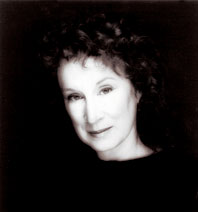
This week in class we are learning how to analyze Poetry. This blog entry is regarding the poem I choose which is, "Variation on the Word Sleep" by Margaret Atwood published in 1981. This is my interpretation:

     This poem is written in open form and it is made up of four stanzas. Throughout the poem the speaker refers to herself/himself as "I" and their beloved as "You". This makes it a bit confusing to describe so please bare with me...

      The first stanza starts off with the speaker stating the desire they have to watch their loved one sleeping. The speaker wants to be engulfed by their beloved's unconscious and travel through the journey of the dream. He/She then describes the beautiful settings as they enter and go forward. The second stanza is the description of a colorful scene which is in a forest/woods. The way the description is given of the sun, it seems as if they are in a bubble of water looking up and that's why the sun appears to be in a "watery" or wavy shape. They continue towards a cave where he/she will follow their beloved as they go down deeper and face the beloved's fear. The third stanza describes the speaker's desire to be the force of protection or shield that will save their beloved of all the grief they must come face to face with in the center.  He/she would like to follow their loved one as the they go up the stairway that will lead them up and where he/she will become the boat that will take them back to safety. Then he/she describes an image of a fire being cupped in his/her own hands that will illuminate the way back to where their bodies lay asleep. The stanza ends with them entering back into their own bodies as air fills your lungs. The fourth and final stanza shows how the speaker wants to be the oxygen that flows deep in their beloved's lungs briefly and then is released. The poem ends with the line that shows how much the speaker cares for and loves their beloved because he/she wants to be a part of them forever without being in the way. There is a sense of sadness in the end because they want to be needed as oxygen but in a way they want to be invisible.

     This poem is beautiful and it is about a love that is so strong and pure for the other person. The speaker is the person who is in love and the audience is the person with whom the speaker is in love with. This poem can also be interpreted as a secret love, where the audience is not aware of the speaker's feelings towards them.

     The tone in this poem feels like longing. The speaker throughout the whole poem has this desire and love that they wish to fulfill, although it is unrealistic. This also makes the reader feel compassion towards the speaker's yearning and desire.

     Margaret Atwood skillfully uses imagery to depict the journey the speaker is traveling through. There are many examples, here are a few:
  • "to enter your sleep as its smooth dark wave slides over my head"
  • "lucent wavering forest of bluegreen leaves with its watery sun and three moons"
  • "a flame in two cupped hands to where your body lies beside me"
     There is also a nice example of personification when she says, "& become the boat that would row you back carefully."

Here is a list of a few key words that stand out of the poem:
  • Sleep-- symbolizes the state of unconscious, portal to the dream realm, and also peacefulness. 
  • Wave--symbolizes transportation into the unconscious, it can also mean time and how its setting is somewhere between sleep and awake.
  • Cave--represents darkness, unknown territory, can even symbolize hell in the dream. Something to fear because of the unfamiliarity.
  • Boat--indicates a means of travel, and the cradling in the ocean can represent the soothing feeling that the speaker is giving to the the audience while he/she brings them back to safety.
  • Flame---represents light and the ability of the speaker to bring back his/her beloved back to their bodies. It can also represent life and consciousness out of the darkness that the unconscious brings.
  • Breathing--represents air and oxygen which are essential for our lives to continue. Breathing also symbolizes life and transparency which is how the speaker wants to be seen, as a necessity without being presently noticed.
     Of all the other poems that we have discussed in class, the one that I can compare or contrast with this poem is the one of Rupert Brooke, "Sonnet Reversed." The reason why I choose this one is because Brooke's poem is this one is also about love and marriage. In this poem the love affair was short and brief. However, in Atwood's poem her's is about lasting love because of the fact that air is necessary for life to continue. In Atwood's poem the speaker wants to be a life long partner and nurture and protect their loved one, as opposed to Brooke's poem that shows how easily love fades and all that is left are the daily mundane lives they lead and children grown to continue their legacy. Atwood's shows pure love and strength the real obligations of a marriage, till death.

The theme of Atwood's Variation of Sleep is the unconditional love that we are supposed to feel when we are in a relationship. There will always be obstacles but if you have someone that will be there to protect, love, care for you and nurture you no matter what stands in your way, love will be the breath of life that will carry you through all the trials and tribulations.


The ocean by the night

Wednesday, March 14, 2012

Blog # 2: HOLY SONNET X

                     
                 http://mccgd.org/wp-content/uploads/2011/07/green-funerals-green-resting-place.jpg


In class we are learning to analyze poems. This week's assignment was to choose a poem that stood out to us and I chose John Donne's Holy Sonnet X:

HOLY SONNETS.


X.
Death, be not proud, though some have called thee

Mighty and dreadful, for thou art not so ;
For those, whom thou think'st thou dost overthrow,
Die not, poor Death, nor yet canst thou kill me.
From rest and sleep, which but thy picture[s] be,
Much pleasure, then from thee much more must flow,
And soonest our best men with thee do go,
Rest of their bones, and soul's delivery.
Thou'rt slave to Fate, chance, kings, and desperate men,
And dost with poison, war, and sickness dwell,
And poppy, or charms can make us sleep as well,
And better than thy stroke ;  why swell'st thou then ?
One short sleep past, we wake eternally,
And Death shall be no more ;  Death, thou shalt die.

Site copyright ©1996-2003 Anniina Jokinen.All Rights Reserved.
Created by Anniina Jokinen
on October 20, 1999. Last updated on September 8, 2003.
    
        This poem stands out to me the most because I have been a person that has feared death and has mourned for the loss of my best friend Victoria May Chin  (1985-2007). I  have never come across a poem with so much depth. I too at many points of my life have given death such a powerful force, and never looked at dying as a gateway towards eternal life. I do not wish to offend anyone with my religious view, but for me the thought of dying and then waking up in eternal life with the ones we love and have lost is a consolation to me. I've always believed in God and Heaven and I hope that when the time comes I too will be reunited with the people I care for. The message of this poem to me is that even though death may come to take away someone we care for, the thought of the power that death holds can be taken away in an instant as soon as it is compared to sleep. Sleep is just a moment of peace that everyone must have in order to live. So if death can be seen as sleep a peaceful feeling, the darkness behind it seems to fade away. The reason for this is because anyone that sleeps must awake, and therefore awaking in eternity is actually a reassuring feeling. Death too will die because those that have been taken will no longer fear death again. Death shall cease to exist so it doesn't matter in which way we go, as long as when we wake death will be no more. 

     The reason why I choose this image to go with my blog is because the setting is a cemetery. We all know that cemeteries are where the dead are buried.  Although it is a sad place to be, the way the sunlight is shining behind the tree shows life. If you look closely it's almost as if the rays provide a path towards the sky, and to me that reminded me how death is a portal to eternity; as the light can symbolize the Heavens above ready to receive the ones that have passed away. Another reason is because there is a big tree which provides oxygen for all of us that are still alive, and oxygen is vital for our lives to continue on.

     The person that I would send this poem to would be my bestfriend's family. The reason why I would send it to them is because I would like them to see that life although it continues without her, eventually we will come face to face with death and I wouldn't want them to be afraid. Instead I want them to embrace the peaceful sleep that will reunite them with their daughter, sister, niece, and granddaughter. I hope that with this new found metaphor of eternal life it makes the process of coping with their loss easier. And that like for me it gives them some kind of closure because I know now that this is only temporary....


Wednesday, March 7, 2012

Blog # 1: Thorns on a Rose


http://pelumiige.blogspot.com/2011/01/with-roses-comes-thorns.html


Today is the 1st time I am creating a blog, this is our first assignment and hopefully I get the hang of this. If not please bare with me as I experiment with this site. I hope you all enjoy my take on the use of symbols and allusions of thorns on a rose.

This is the quote I choose to use:

 A familiar proverb, repeated in many poems, is "Roses have thorns" (Shakespeare, Sonnets 35) or "ne'er the rose without the thorn" (Herrick, "The Rose"). If you go about plucking roses, gentlemen, you may get pricked. In his famous "Heidenröslein," Goethe presents a dialogue between a boy and a rose: "The boy said,'I shall pick you, / Little rose on the heath.' / The little rose said,'I shall prick you / So you'll always think of me.'"

The truth is that every rose grows with thorns, only after the rose is plucked or cut are the thorns removed. They do this in order to make a nice bouquet of flowers, and also in order to protect people hurting themselves with the thorns. The quote shows that this is true in regards to every rose and the reason why this quote stood out to me is because the little boy that picks the rose may be drawn to its exterior beauty. However, he does not stop to think of the consequences of picking the rose and that's why the rose responds to him about her thorns leaving behind a memory.

Once a rose is picked from a garden, it lives only for a few days if cared for correctly. Unfortunately the end result will always be the same and that is, that it eventually will wither and die. Yet a prick provides pain which can be associated with a memory. Once you feel the puncture of a thorn on your finger, you will remember the drop of blood and also the pain that lasts; which helps to make you remember not to make the same mistake in the future. It serves as a lesson that will be learned and never forgotten unlike the rose which has already come and gone, only leaving behind a form of a memory.


"Rose." Dictionary of Literary Symbols. Ed. Michael Ferber. Cambridge, United Kingdom: Cambridge, 1999. 172-177. Gale Virtual Reference Library. Web. 7 Mar. 2012.